
Technology progression has reached staggering rates in recent years – and so are the careers shaping it. This progression is introducing new and exciting innovations, developments and breakthroughs to the biomanufacturing field.
From next-generation therapies and medicines to biosimilars and automation, biomanufacturing innovation is shaping the industry for the better. These trends also present exciting opportunities for professionals wanting to enter the field and make a difference in the lives of others.
At Danaher, our work is accelerating idea-to-impact, and as a result partnering with customers to solve the hardest problems, together.
Here are five key trends shaping the industry, the career opportunities they create and the role industry leaders play in building a healthier future.
Table of Contents
- 1. The Shift to Continuous Biomanufacturing
- 2. The Rise of Flexible, Single-Use Technology
- 3. The Integration of Automation and AI
- 4. The Growth of Advanced and Personalized Therapies
- 5. The Expansion of Biosimilars and Combination Products
- Building a Career in an Evolving Industry
- How Danaher Advances Biomanufacturing Solutions
- Create an Impact — Explore Biotechnology Jobs at Danaher
1. The Shift to Continuous Biomanufacturing
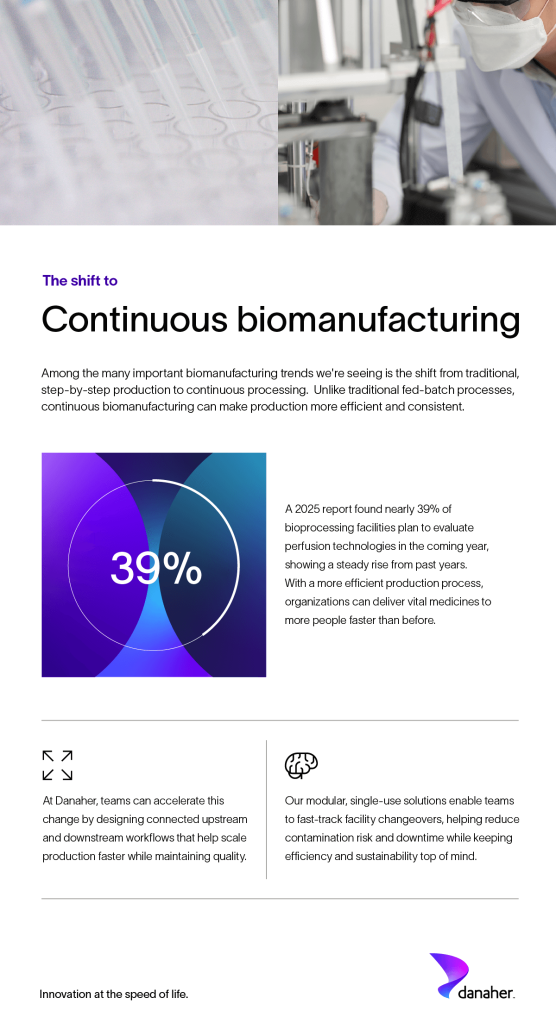
Among the many important biomanufacturing trends we’re seeing is the shift from traditional, step-by-step production to continuous processing. The latter approach, which usually uses perfusion technologies, continuously supplies cells with fresh media while removing waste products.
Unlike traditional fed-batch processes, continuous biomanufacturing can make production more efficient and consistent. Organizations can use it to scale up faster and meet global needs.
In fact, a 2025 report found nearly 39% of bioprocessing facilities plan to evaluate perfusion technologies in the coming year, showing a steady rise from past years. With a more efficient production process, organizations can deliver vital medicines to more people faster than before.
At Danaher, teams can accelerate this change by designing connected upstream and downstream workflows that help scale production faster while maintaining quality. Our modular, single-use solutions enable teams to fast-track facility changeovers, helping reduce contamination risk and downtime while keeping efficiency and sustainability top of mind.
For those entering this field, there is an opportunity to be at the forefront of developing lifesaving therapies. For example, as a bioprocess specialist, you can combine scientific expertise and technical creativity to compress scale-up timelines, tighten process control and improve consistency between runs. This means helping more people access the treatments they need, faster and more reliably than before.
2. The Rise of Flexible, Single-Use Technology
Flexible, single-use technology stands out as another major biomanufacturing innovation. From disposable bioreactors and tubing to modular setups, these systems can be easily adapted for different products or processes. Single-use solutions can help reduce the risk of contamination, shorten the time needed to set up new facilities and bring more sustainable production methods into the field.
As more companies turn to single-use solutions, they’ll be able to respond faster to changing demands and bring innovative treatments to patients with more speed and confidence.
3. The Integration of Automation and AI
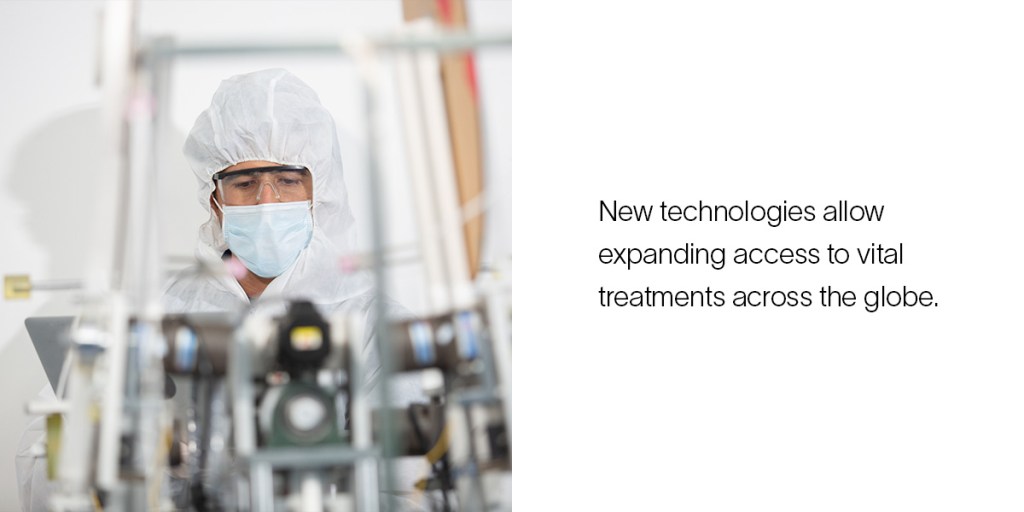
Automation, artificial intelligence (AI), machine learning (ML), and data analytics will continue to create opportunities for biomanufacturing. In the coming years, we’ll see new smart technologies changing all stages of production, from early drug discovery to final product release.
For instance, AI and ML algorithms help teams predict drug behavior. They can accelerate clinical trials and ensure consistent product quality. At the same time, automation and robotics are reducing the need for human workers to carry out repetitive tasks. These solutions can make work more precise, reduce errors and boost efficiency so that new medicines can reach patients much faster.
Additionally, advanced data analytics allow teams to monitor production in real time. They can use predictive quality control to maintain high standards, ensuring that patients can access more effective, safe and consistent drugs and medical products.
By embracing these technologies, the industry will be able to deliver vital therapies to more people in the future. This marks a significant step forward in biomanufacturing innovation.
As AI and automation continue to grow, the field will expand into various careers. At Danaher, data scientists, engineers and automation specialists collaborate to bring these innovations to life. They create systems that can learn and adapt to advance medicine.
Our professionals have the opportunity to push the boundaries of what technology can do in healthcare. For instance, they can help develop predictive models that ensure product quality or design robotics that streamline production. Danaher is a place for curious minds who want to shape the intersection of biology and technology.
4. The Growth of Advanced and Personalized Therapies
Advanced and personalized therapies, including cell and gene treatments, are growing faster than ever before. These therapies offer new hope for patients by targeting conditions that previously had limited or no treatment options.
As more therapies receive regulatory approval, we’ll see a demand for new manufacturing solutions increase, too. Data analytics and more flexible production systems will allow organizations to deliver treatments safely, efficiently and at a greater scale.
Going beyond benefiting patients, these process improvements will challenge the biomanufacturing industry to continue adapting. By developing and delivering personalized medicine, biomanufacturing careers help turn scientific breakthroughs into real solutions for people around the world.
At Danaher, we are shaping the future of medicine by driving advancements in mRNA therapies. Our operating companies, like Cytiva and Aldevron, have formed an mRNA production ecosystem with sequence-to-vial capabilities. This approach empowers our partners to develop breakthrough vaccines, pioneer treatments for cancer and provide personalized therapies for rare genetic disorders.
This innovative work creates exceptional career pathways for professionals eager to make an impact. Those inspired to accelerate scientific progress, especially in fields like nucleic acid therapeutics, bioprocessing and drug development, will thrive in careers like:
- Bioprocess specialists: Optimize and scale manufacturing processes to produce life-saving therapies.
- Automation and data scientists: Develop intelligent systems and analyze critical data to enhance precision and efficiency in biomanufacturing.
- Process development engineers: Design and refine bioproduction methods that accelerate the journey from concept to therapeutic reality.
- Research scientists: Drive discovery and development of novel mRNA-based treatments and advanced therapies.
- Molecular biologists: Advance understanding and application of molecular mechanisms to unlock new therapeutic possibilities.
- Systems engineers: Integrate complex technologies and systems to create seamless and robust biomanufacturing platforms.
- Quality assurance professionals: Uphold rigorous standards to ensure the safety, purity and effectiveness of biopharmaceutical products.
- Regulatory affairs specialists: Navigate global guidelines to ensure new therapies meet all necessary approvals and reach patients safely.
5. The Expansion of Biosimilars and Combination Products
Market changes will continue driving innovation in biotechnology, particularly for biosimilars and combination products. As the patents for original biologic medicines expire, biosimilars have the power to make important therapies accessible to patients around the world.
At the same time, we’re seeing combination products like antibody drug conjugates (ADCs) emerge as a way to deliver more targeted and effective treatments to those who need them most. The approach involves combining different therapeutic approaches to improve patient outcomes and help address unmet medical needs.
With new biomanufacturing solutions, the industry can make sure that biosimilars and combination products are produced efficiently, safely and at scale. Together, these innovations can expand treatment options and continue shaping the future of healthcare.
Building a Career in an Evolving Industry
Biomanufacturing innovations are opening new doors for people who seek meaningful, impactful work. As the field changes and grows with continuous processing, single-use technology, automation and advanced therapies, the demand for skilled professionals also rises.
Biomanufacturing careers now call for those who thrive at the intersection of biology, data science and engineering fields to shape the future of health care.
The Growing Demand for Skilled Talent
Organizations are looking for passionate professionals who are analytical thinkers and have technical expertise. As biomanufacturing processes become more automated and driven by data analytics, professionals who can bridge the gap between science and technology will find much success in this industry.
Anyone ready to embrace change and drive progress can look forward to a wealth of opportunities.
What the Future Workforce Looks Like
Success in biomanufacturing careers will require more than technical knowledge. Professionals should be adaptable, excited to learn every day and open to collaborating across teams. The field values curious professionals who are open to new ideas and able to work with different types of professionals.
As biomanufacturing continues to evolve, those who can grow alongside new technologies will find themselves at the forefront of medical progress, helping to deliver life-changing therapies to patients worldwide.
How Danaher Advances Biomanufacturing Solutions
At Danaher, we help address some of the world’s greatest health challenges by supporting customers at every stage of biomanufacturing.
We are at the forefront of biomanufacturing innovation, consistently investing a percentage of revenue toward research and development. Our team stays flexible, always seeking collaborations to combine our strengths and create new solutions. We partner with both private and public institutions to drive the industrialization of cell and gene therapies.
Our teams share a commitment to advancing health through science and technology, fostering a culture where every associate can contribute to meaningful progress.
Together, we help shape the future of medicine, delivering solutions that make a real difference for patients and communities worldwide.
Create an Impact — Explore Biotechnology Jobs at Danaher
Biomanufacturing is a dynamic, purpose-driven field where innovation shapes the future of healthcare. At Danaher, we remain committed to advancing health through technology, empowering our teams to make a real difference. As the field changes, so do the opportunities for passionate professionals ready to drive progress and deliver life-changing solutions.
With us, your career growth is tied to meaningful progress — the therapies you help accelerate, the systems you improve and the lives you impact. If you are ready to turn your expertise into purpose, join us in shaping the future of biomanufacturing. Learn more about our available Biotechnology jobs or apply today.
