

Landing a role as a senior engineer is a dream for many individuals in this field, but how do you actually reach this goal? In higher-ranking positions, senior engineers need the skills to manage both projects and people. They influence every aspect of projects, from design to testing and see the real-world impact of their work.
Table of Contents
- What is a senior engineer?
- What does a senior engineer do?
- The typical duties of a senior engineer
- What do hiring managers look for?
- Senior engineer skills
- How much does a senior engineer make?
- How long does it take to become a senior engineer?
- Senior engineer career paths
- How to become a senior engineer specializing in biotech
- Progression path options for senior engineers
- Top career tips for engineers
- Becoming a senior engineer: FAQs
- Take your engineering career to the next level with Danaher
If you’re working toward becoming a senior engineer, read on for more on what you can expect in your journey and tips to reach your goal.
What is a senior engineer?
A senior engineer is a seasoned professional with a wealth of experience and expertise. Unlike junior or mid-level engineers, senior engineers possess a deep understanding of engineering principles and practices, honed through years of hands-on work and problem-solving.
At Danaher, senior engineers are the thought leaders and technical architects who guide teams to develop groundbreaking solutions and foster a culture of continuous improvement through mentorship.
Staff engineers vs. senior engineers
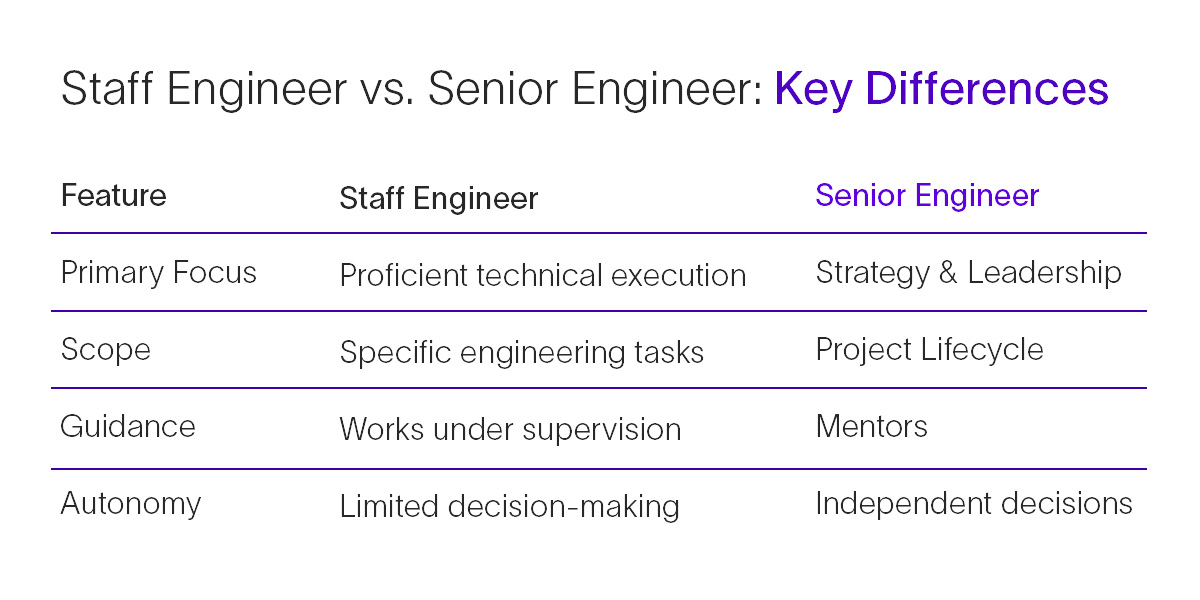
One key difference between senior engineers and staff engineers lies in the level of experience and responsibility. While staff engineers may have proficient technical skills, senior engineers take on more of a leadership role and provide guidance and mentorship to junior team members.
Additionally, senior engineers have a broader scope of responsibilities than staff engineers. They handle engineering tasks and take on strategic planning and project management. They help shape the direction of projects, ensuring their successful execution — from conception to completion.
Another notable difference involves the level of autonomy and decision-making authority. Senior engineers make crucial decisions independently, drawing on their expertise and judgment to navigate complex challenges. In contrast, staff engineers may work under closer supervision and guidance, with less autonomy in decision-making.
At Danaher, both senior engineers and staff engineers contribute to solving complex technical problems, but senior engineers are distinguished by the mentorship and the strategic technical direction they provide. They use the Danaher Business System (DBS) — our proven set of management tools and processes that drives continuous improvement, operational excellence and leadership — to empower their teams for success.
What does a senior engineer do?
Senior engineers complete multifaceted and varied day-to-day tasks, reflecting their role as technical experts and team leaders. The typical expectations of a senior engineer often include the following:
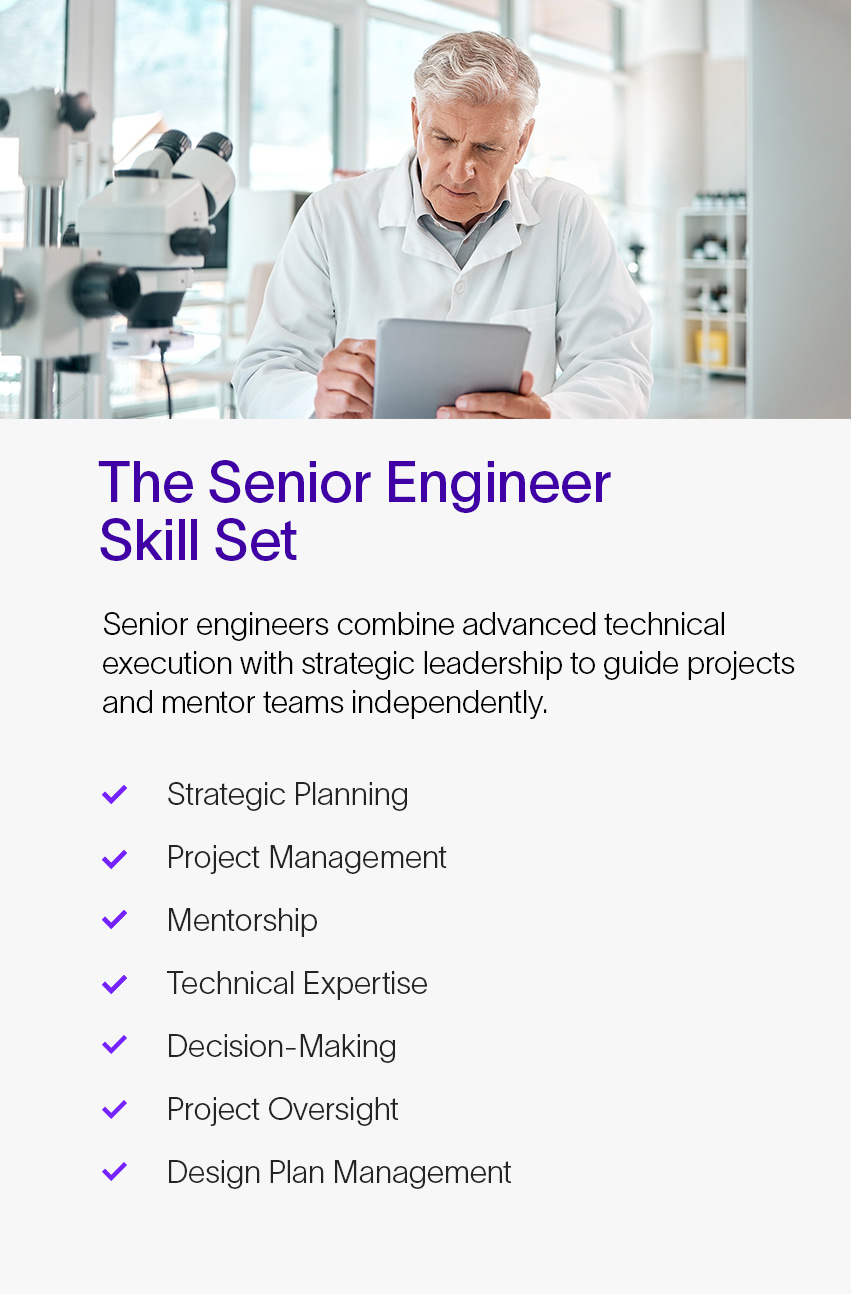
- Project oversight: Senior engineers supervise and manage projects from beginning to end. This process involves coordinating with team members, setting project goals and meeting timelines and budgets.
- Technical guidance: As seniors, these individuals serve as technical experts, offering guidance and support to junior engineers. They use their expertise to solve complex engineering problems and provide direction on technical matters.
- Design plan management: Senior engineers oversee the development and implementation of design plans for engineering projects. They ensure that designs meet specifications, comply with regulations and achieve desired outcomes.
- Client liaison: Individuals in these positions often act as clients’ primary point of contact, representing their organizations in meetings and negotiations. They work closely with clients to understand their needs, communicate project progress and address concerns.
- Budget management: Senior engineers manage project budgets, allocate resources effectively and control costs. They must ensure that projects get completed within budget constraints while maintaining high quality standards.
At Danaher, senior engineers take on all these responsibilities with the aim of achieving critical breakthroughs in life sciences, diagnostics and biotechnology. For example, a senior software engineer at an operating company like IDBS would lead the design, development and maintenance of microservices and core platform infrastructure that support biopharma organizations. Their role involves full lifecycle ownership and collaborating extensively with scientists and product specialists, translating cutting-edge research into products that directly contribute to improving patient lives.
The typical duties of a senior engineer
A typical workday for a senior engineer starts with project oversight, during which they review progress and monitor budgets and timelines. A crucial part of their work involves nurturing employees and providing support when they encounter technical issues. Senior engineers might also assist in onboarding new employees and helping them integrate into the team.
Conducting research is also a crucial part of a senior engineer’s tasks. They analyze data and evaluate technologies to ensure the team stays up to date with the latest industry trends, maximizing productivity and efficiency. As the bridge between the technical team and external parties, senior engineers negotiate contracts with subcontractors and vendors and ensure the terms align with project objectives. Senior engineers present their findings to stakeholders, clients and teams, ensuring everyone that projects are on track and conveying complex technical information clearly and understandably.
What do hiring managers look for?
When hiring managers look for senior engineers, they are seeking a strong technical match, role alignment and the right sector experience. Here’s a breakdown of what this looks like:
- Technical match: Hiring managers check that your knowledge of core techniques and systems aligns with their facilities.
- Role alignment: Your work experience must be applicable to the position of a senior engineer.
- Sector experience: To earn a senior position in the biotech industry, you need relevant experience in the pharma, biotech or related sector.
The right engineer should be able to implement processes that comply with regulatory requirements and have a strong understanding of the technology underlying biotech processes. Since senior engineers are often responsible for managing projects from start to finish, it’s also crucial to become a pro at developing project timelines and completing projects within the budget and time.
At Danaher, hiring managers for senior engineering roles seek candidates who show a proactive problem-solving mindset and deep technical mastery. They look for proven leadership in navigating complex technical challenges, a strong track record of continuous improvement, and experience in highly regulated environments where quality and compliance are crucial. Candidates who can connect their work to scientific advancement and patient outcomes and show strong mentoring abilities stand out.
Senior engineer skills
Becoming a senior engineer requires hard and soft skills. It calls for harmony between technical skills in software and tools, as well as strong communication and conflict-resolution capabilities to keep teams running smoothly. Here are some of the hard and soft senior engineer skills required:
Hard skills
Focusing on these specific hard skills can help individuals set themselves up for success in a senior engineering role:
- Technical proficiency: Engineers must have advanced technical knowledge and proficiency in a particular field of engineering. These may include expertise in relevant software and methodologies.
- Analytical skills: Strong analytical skills help individuals assess complex engineering problems, identify viable solutions and make data-driven decisions. Senior engineers must be able to analyze data and draw meaningful conclusions.
- Project management: Senior engineers often manage multiple projects simultaneously. They must have excellent project management skills, including the ability to organize and execute projects effectively while meeting deadlines and budget constraints.
- Problem-solving ability: Senior engineers must be adept problem solvers capable of tackling challenging engineering issues and finding innovative solutions. They must approach problems methodically, consider various alternatives and implement effective solutions.
Soft skills
Soft skills are equally important as hard skills. Developing the following skill set can help applicants engage with clients and colleagues:
- Leadership: Senior engineers must demonstrate leadership skills, like inspiring and motivating team members, delegating tasks, and providing guidance and direction. They must foster a collaborative and inclusive work environment where team members feel empowered to contribute their best.
- Communication: Effective communication helps senior engineers convey complex technical information clearly and concisely to various stakeholders. They must be able to articulate ideas, present findings and facilitate productive discussions.
- Teamwork: Senior engineers work collaboratively with multidisciplinary teams to achieve project objectives. They must work effectively in a team environment and use collective expertise to drive project success.
- Adaptability: The engineering landscape constantly evolves, and senior engineers must be adaptable and open to change. They must navigate uncertainty, embrace new technologies and methodologies and pivot quickly in response to evolving project requirements.
How much does a senior engineer make?
While salaries vary based on location, industry and level of experience, senior engineers typically command competitive compensation packages.
According to Indeed, the salary range for senior engineers in the United States falls between $90,347 and over $208,506 annually. The base senior engineer salary averages around $137,251. However, these figures can fluctuate based on factors such as the engineer’s specialization, level of expertise and geographic location.
Bonuses and benefits
In addition to base salaries, senior engineers often enjoy various financial benefits and incentives. These may include performance-based bonuses, profit-sharing opportunities, stock options, comprehensive health care packages and retirement benefits. Some organizations also offer perks like flexible work schedules, remote work options and professional development stipends to support ongoing learning and skill enhancement.
Senior engineers may negotiate additional compensation components, such as relocation assistance, signing bonuses and annual salary reviews. As they progress in their careers and accumulate more experience and expertise, senior engineers can leverage their skills and achievements to secure increasingly attractive compensation packages.
Aspiring senior engineers should also weigh other factors — such as job satisfaction, career growth opportunities and work-life balance — when evaluating their career paths.
How long does it take to become a senior engineer?
The timeline for becoming a senior engineer varies for each individual. It typically depends on your education, experience and professional development, but it typically takes around 5 to 10 years to reach a senior engineering role. If you hold advanced degrees or specialized experience, the time frame to attain a senior role may be shorter.
There isn’t really an accepted definition or benchmark. To become a senior engineering specialist in the biotech industry, you need to have proven experience in Good Manufacturing Practices, management and mentorship roles and other core competencies of biotech, like molecular biology. While there’s no definite progression, if you want to achieve a senior position more quickly, it might be worth looking into a smaller biotech startup, since larger companies tend to have more structured career ladders and slower progression.
Senior engineer career paths
As engineers progress in their careers, they often have the opportunity to specialize in specific areas. This specialization can lead to various career paths, each with its unique set of responsibilities and opportunities for growth.
Let’s explore some common career paths for senior engineers:
- Senior design engineer: These engineers oversee the design process of complex engineering projects. They collaborate with multidisciplinary teams to develop innovative solutions and ensure that designs meet technical specifications and regulatory requirements. Senior design engineers may specialize in civil, mechanical, electrical or software engineering.
- Senior network engineer: Senior network engineers design, implement and maintain computer networks for organizations. They ensure that networks operate efficiently and securely. These engineers often lead network architecture projects and provide technical guidance to junior engineers.
- Senior electrical engineer: Senior electrical engineers specialize in designing, developing and testing electrical systems and components. They may work on projects ranging from power distribution and control systems to electronic devices and circuits. Senior electrical engineers often lead the electrical design phase of large-scale projects and provide technical support to project teams.
- Senior project engineer: Senior project engineers oversee the planning, execution and completion of engineering projects. They coordinate project activities, manage resources and ensure that projects get delivered on time and within budget. They may specialize in areas such as construction, manufacturing or infrastructure projects.
- Senior software engineer: Senior software engineers develop and maintain software applications, systems and platforms. Proficient in programming languages and software development methodologies, they collaborate with cross-functional teams to deliver high-quality software solutions. Senior software engineers may specialize in web development, mobile applications or embedded systems.
- Senior mechanical engineer: Senior mechanical engineers design and analyze mechanical systems and components, such as engines, machinery and equipment. They use computer-aided design (CAD) software and simulation tools to optimize designs and ensure functionality and reliability. Senior mechanical engineers may specialize in HVAC, aerospace or automotive engineering.
Danaher’s expansive network of operating companies provides broad opportunities for senior engineers across these specializations. For instance, a senior network manager at Pall ensures a secure global IT infrastructure, applying the DBS philosophy to drive innovation. Our diverse portfolio means senior engineers can find specialized roles directly contributing to breakthroughs in areas they’re passionate about across life sciences, diagnostics and biotechnology.
How to become a senior engineer specializing in biotech
There is no one direct route toward becoming a senior engineer. However, there are general education and experience requirements that you can work toward at your own pace. Here’s a breakdown of the typical and accelerated path toward achieving this goal:
The typical path
Usually, the path to becoming a senior software engineer in the Biotech field starts with a solid educational foundation. Aim for an undergraduate degree in Engineering or Bioinformatics. Building some programming skills is also a major perk. A master’s or Ph.D. in any relevant engineering discipline or Bioinformatics can also help accelerate your path toward a senior role.
You’d need to work in an entry-level role for around three years in bioinformatics engineering or software engineering. Once you’re more capable of taking on more complex projects, you’ll be able to land a mid-level role. When you’ve developed great technical skills and gained significant leadership experience, you can qualify for more senior roles.
The accelerated path
If you want to hit your goal of becoming a senior engineer quicker, you can strategically fast-track your journey. Choose a streamlined education journey that focuses on Biomedical Engineering. If you want to study further, choose a postgraduate degree in an area such as Computational Biology or Bioinformatics. Ensure your thesis addresses topics and systems relevant to the biotech field.
Where possible, take as many courses as you can on relevant machine learning techniques, genomics and proteomics. Instead of starting a junior position and working your way up, look for internships at biotech companies or pharmaceutical firms to build industry-relevant experience. Aim for aggressive skill development in core technologies like Python and cloud computing. Seek out senior engineers for mentorship opportunities and attend networking and industry conferences to accelerate your opportunities.
At Danaher, specializing in biotech as a senior engineer means immersing yourself in projects that directly advance human health and scientific understanding. We offer unparalleled opportunities to apply advanced engineering skills to real-world challenges in areas like genomics, molecular diagnostics and biopharmaceutical development. Our environment supports continuous learning in machine learning, data science and other cutting-edge technologies, often within highly collaborative teams alongside leading scientists.
Progression path options for senior engineers
Deciding whether to go with an individual contributor (IC) or a management path is a common pain point for engineers. Both paths offer unique experiences to consider before making a decision.

IC path
If you’re looking for hands-on technical work and the opportunity to work front-line with writing code, solving challenging technical problems and designing complex systems, then the IC path might be the one for you. This path often opens up progression roles like senior IC and principal engineer, where you’ll provide technical direction, mentor junior engineers and have a broad impact on the technical landscape. As an IC, you will have fewer direct people management responsibilities and more opportunities to use your strong technical skills.
Management path
The management path is more people-focused, where you lead and develop staff and projects. In this role, you can make an impact by empowering the team through strong leadership and communication. Potential progression roles might include Director of Engineering or VP of Engineering. You will be responsible for fostering team growth and removing potential roadblocks.
At Danaher, both the IC and management paths offer rewarding career progression for senior engineers. For ICs, there are opportunities to become deep technical experts, principal engineers or architects, driving innovation and shaping the technical future of our solutions. Those drawn to management can progress to positions of increasing responsibility, which could include leading and scaling engineering departments or multiple teams.
Top career tips for engineers
Engineers in the biotech field use mathematics and technology to develop solutions that improve lives. Individuals looking to earn more senior roles in this field should acquire the necessary qualifications and have a strong understanding of what employers prioritize. Here are some useful career tips for anyone interested in a senior position in the biotech field:
Get the right certificates
With the right qualifications, you can stand out when applying for roles and get access to the internships and opportunities most relevant to the biotech and engineering industries. Here are the top options:
- Certified Biotechnology Assistant (CBA): This certification is an excellent add-on for qualified engineers looking to gain entry into the biotechnology field because it covers basic laboratory skills and knowledge. It can help you enter some foundational biotechnology careers and work your way up to a more senior position.
- Regulatory Affairs Certification (RAC): This globally recognized certification is respected in the pharmaceutical and biotechnology industries. Paired with engineering qualifications and experience, it can open doors to senior regulatory positions or other management roles.
- Biotech Project Management Certifications: Specialized project management certifications for the biotech field can help engineers get recognized for management and senior roles. These certifications typically focus on preparing professionals to lead and organize teams in the biotech industry.
- Certified Clinical Research Associate (CRA): This certification proves your ability to conduct and monitor clinical trials and it gives you a solid understanding of Good Clinical Practice guidelines. If you’re an engineer looking to enter fields of biotechnology like drug development or surgical robotics, this would be a good option.
Understand what engineering employers are looking for
Engineering employers are looking for more than technical competence. To secure a senior role in modern workplaces, you’ll need both technical and soft skills, such as communication and listening. Candidates need to demonstrate that they can apply engineering principles to achieve business goals while also being an asset and a support to the team. Understanding what engineering employers are looking for can help you tailor your skills and resume to stand out. Here are some of the top criteria that employers value for senior engineering roles:
- Showing cross-functional collaboration: Engineering projects in the biotech field rarely happen in isolation. You’ll likely be working with a team of specialists, including architects, clinical research associates and specialist technicians. It’s important to possess the communication skills to convey technical ideas to non-technical stakeholders and work collaboratively in a team.
- Adapting to emerging technologies: The engineering and biotech fields are always evolving, so you need to stay current with the latest design methodologies, materials and tools. Investing in continuous improvement shows employers that you can adapt and get the most out of new technologies.
- Displaying sustainability and cost awareness: Modern engineering projects emphasize precision in design, as well as cost efficiency and sustainability. Illustrate how you applied principles of sustainability in real-life projects and share examples of how you resolved technical conflicts or ensured compliance under tight deadlines during interviews.
- Demonstrating mentorship and leadership skills: Senior engineers possess the technical skills to deliver projects, but also the leadership skills to motivate and support the team. Highlight examples of times that you’ve mentored junior engineers or projects where you’ve supported a team. Employers want to see that you can successfully guide the team.
Delegate to team members
It’s important for engineers to show their trust in their team members and delegate tasks to keep projects moving. The ability to scale work effectively is a critical skill for senior engineers. While your knowledge and skills will be crucial in the field, communicating clearly with others will help teams learn from your guidance and show your leadership capabilities.
Being able to effectively delegate tasks frees up time to focus on senior-level work, making it a standout skill for engineers seeking a higher-level role. Soft skills like communication are essential for getting to know your team members better and matching the right task to the right talent.
Avoid common mistakes that stall promotions
Attaining a senior position is not just about technical capability. It’s about striking the right balance between technical skills, behavior and impact. Senior engineers need to possess the leadership and technical skills to stand out. Hiding away from getting recognition or pointing out the difference you made on projects could cost you a promotion.
One common mistake people make is thinking that promotions are solely about output. Other factors, like behavior, also help engineers get promoted. Senior engineers don’t produce results — they design solutions that make it easier for others to achieve success. The key to getting promoted in this field lies in helping others tackle problems, making a significant impact on projects without exerting your output and being a source of support for team members.
Actively seeking and being open to feedback can help you identify and address any perceived gaps in your performance. It’s essential to process the feedback and work toward improving in those areas. Asking for feedback can also show that you have a growth mindset and value input from others, which are crucial leadership skills.
Becoming a senior engineer: FAQs
Consider the answers to these frequently asked questions for extra clarity and guidance.
1. How many years does it take to become a senior engineer?
The timeline to becoming a senior engineer varies depending on education, experience and professional development. It typically takes at least 5 to 10 years of relevant engineering experience to qualify for a senior engineering role. However, this time frame may be shorter for individuals with advanced degrees or specialized expertise. Candidates should focus on continuous learning, skill development and gaining practical experience.
2. What qualifications do applicants need to become a senior engineer?
Individuals looking to become senior engineers usually need a bachelor’s degree in engineering or a related field from an accredited institution. Additionally, they should have several years of relevant engineering experience that demonstrates a thorough understanding of engineering principles and practices. Advanced degrees or professional certifications may enhance an aspiring senior engineer’s qualifications and credibility.
3. How can candidates stand out when applying for senior engineering roles?
To stand out as a candidate for senior engineering roles, you should:
- Focus on developing a diversified skill set, including hard and soft skills.
- Demonstrate strong leadership abilities, problem-solving skills and the capacity to manage complex projects effectively.
- Seek opportunities for professional development, such as training programs, certifications and leadership roles within professional organizations.
Aspiring senior engineers can also showcase their accomplishments and contributions through a well-crafted resume and professional networking.
4. What do the responsibilities of a senior engineer include?
Senior engineers typically oversee projects, provide technical guidance and mentorship to junior engineers and contribute to strategic decision-making within their organization. They may be involved in project planning, design and implementation, budget management, client liaison, and team leadership. Additionally, senior engineers must stay abreast of industry trends, regulations and best practices to ensure the success of engineering projects.
5. Can a senior engineer switch between the individual contributor and management paths?
A senior engineer can switch between the IC and management paths with the right set of skills. An IC path typically focuses on technical expertise and making an impact through direct contributions. Management paths are potential transitions for engineers with strong leadership potential who can balance technical contributions with team support.
6. What is the salary expectation for engineers in the biomedical field?
The average annual salary expectation for engineers in the biomedical field was $106,950 in May 2024. The salary would be higher at larger companies, but the path to a senior position may be more challenging. Senior engineers earn higher salaries and typically work in specialized fields such as research facilities and manufacturing.
Take your engineering career to the next level with Danaher
Congratulations on taking the first step toward advancing your engineering career to the senior level! Becoming a senior engineer opens doors to exciting opportunities for leadership, innovation and professional growth.
At Danaher, we’re committed to accelerating the power of science and technology to improve human health and drive positive change in the world. As a global leader in life sciences and diagnostics innovation, we offer a dynamic and supportive environment where talented engineers like you can thrive and make a meaningful impact.
Explore senior engineer positions at Danaher to join a team dedicated to pushing the boundaries of what’s possible. With our culture of continuous improvement and a commitment to career development, you’ll have the resources and support you need to succeed.

Leave a Reply