
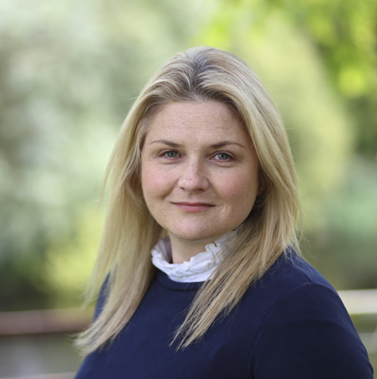
Every day a cancer patient waits for their diagnosis can feel like an eternity. For Catherine Conway, Director of Clinical AI Applications at Leica Biosystems, a Danaher diagnostics company, that waiting time isn’t just a statistic—it’s the driving force behind two decades of work at the cutting edge of digital pathology and artificial intelligence. Her journey also offers a window into careers in diagnostics, engineering and life sciences—where AI is accelerating innovation and impact at Danaher.
“Every day of waiting can have a significant impact on a patient’s prognosis,” she says. It’s a reality that has followed her from a small town in Ireland to the National Institutes of Health in the U.S., and now to the forefront of AI innovation at Danaher—where she’s building the tools that could finally transform how cancer is diagnosed around the world.
The promise of digital pathology has always been there. But Catherine and her team aren’t just imagining the future anymore—they’re engineering it.
When software met science: building a career in diagnostics and AI
Catherine’s path into healthcare AI wasn’t always obvious. She began her academic journey with a bachelor’s degree in biotechnology, but it was her final‑year dissertation that brought everything together. She was developing a software interface to automatically review whole‑slide images of tissue microarrays when it clicked.
“For the first time in four years, my degree truly came together,” she recalls. “It combined my passions for both software and histology.”
After a brief role as a validation engineer at Bristol Myers Squibb, Catherine returned to academia to pursue a PhD focused on developing and validating image‑analysis algorithms to quantify immunohistochemistry. During her doctoral studies, a research grant brought her to a U.S. laboratory — sparking a passion for living and working in America.
Following her PhD, she joined a digital pathology startup that went through two acquisitions, the second by Leica Microsystems, another Danaher company. But the pull of research was strong. Catherine relocated to the U.S. to complete a postdoctoral fellowship at the Laboratory of Pathology at the National Cancer Institute (NCI), part of the National Institutes of Health.
“Over the next 2.5 years, I realized my dream of living in the U.S. while continuing to deepen my expertise in digital pathology, companion diagnostic development and quantitative histology,” she says. Her work contributed to 21 peer-reviewed publications and a book chapter on image analysis applications.
Recognizing the market leader in diagnostics
In 2013, Catherine was approached to return to Danaher through a role at Leica Biosystems. Her experience supporting multiple digital pathology vendors at NCI gave her a unique perspective.
“It became clear that many offerings fell short of what Leica Biosystems provided,” she explains. “Aperio Digital Pathology Solutions stood out as the market leader.”
Although the role was based in Ireland, the opportunity aligned perfectly. As Product Manager for Image Analysis, Catherine applied her research expertise to product development and validation at global scale.
“The scale and impact of Leica Biosystems’ footprint truly excited me,” she says.
Seven roles, one unwavering mission in diagnostics and engineering
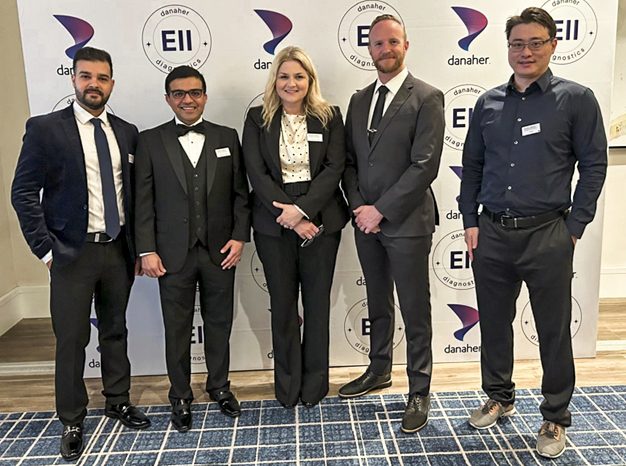
Over the past 12 years at Leica Biosystems, Catherine has held seven different roles—each building on the last and deepening her impact. Today, she leads an ambitious R&D team developing AI and software tools for digital pathology.
Her team includes deep learning and computer vision scientists, software engineers, AI systems test engineers and an AI architect.
“Together, we build tools that improve the efficiency and reliability of digital pathology workflows—specifically by detecting histological or digital artifacts that could compromise the quality of whole slide images used in clinical interpretation,” she explains. This includes detecting histological and digital artifacts that could compromise clinical interpretation, as well as developing backend software to enable the transfer of large whole‑slide images to the cloud for use by third‑party AI vendors.
There’s no typical day in Catherine’s role. Her time is split between strategic planning, focused work, one‑on‑one meetings and cross‑functional collaboration.
As a people leader, she focuses on anticipating obstacles and taking proactive steps to address them. “Much of the role involves listening, responding thoughtfully and leading with purpose to ensure we stay on track, achieve our goals and support the growth and development of every team member,” she says.
What she enjoys most is the variety. “It allows me to combine my technical background in digital pathology, image analysis and histopathology with my passion for people leadership and cross-functional collaboration,” she explains.

Interested in applying your skills in AI, software engineering or diagnostics?
Explore careers in diagnostics across Danaher’s global businesses.
AI and the future of cancer diagnostics
For over 20 years, Catherine has heard the same refrain from customers: “Digital pathology is the future and always will be.” At first, it was humorous, but over the years it felt almost like a curse.
“I genuinely believe digital pathology has the power to transform cancer diagnostics and make a real difference in the lives of patients awaiting their results,” she says. Yet the challenge has been adoption. Like any new technology, digital pathology often introduces labor-intensive steps that complicate workflows—creating barriers to widespread use.
“What excites me most is the potential for AI to address these workflow inefficiencies,” Catherine explains. “To me, digital pathology is the leading star, while AI is the enabling technology that clears the path—automating the mundane, simplifying the cumbersome, and reducing the costly obstacles to adoption.”
Catherine sees AI’s evolution happening in stages: first replicating what pathologists do today, then assisting them and ultimately enabling capabilities beyond what any individual could achieve alone.
Strategic innovation, not magic solutions
Catherine is quick to emphasize that AI isn’t a cure-all.
“Poorly implemented AI can introduce risks and unintended consequences,” she cautions. “However, in the hands of Danaher and Leica Biosystems, AI is being developed thoughtfully and strategically to drive meaningful improvements—enhancing efficiency, improving diagnostic accuracy, and unlocking entirely new capabilities that were previously out of reach.”
To quote one of her customers: “AI will not replace pathologists, but pathologists who use AI will replace those who don’t.”
Catherine believes this applies to many professions today. “AI will continue to evolve and transform the way we work, but it’s here to stay,” she says. For those early in their careers in diagnostics or considering a pivot into healthcare AI, Catherine sees enormous opportunity. “There has never been a more exciting time to get involved,” she says.

A career highlight with personal meaning
In 2024, Catherine received Danaher’s Fiona Rounding Adair Award for Excellence in Innovation. This is an annual award presented to an individual who exemplifies the spirit of innovation with perseverance and integrity. “I was nominated by my manager and presented with the award by the Leica Biosystems president,” she reflects. “I can truly say that it has been my career highlight, and I am just so deeply grateful and humbled by the recognition.”
The award held special personal meaning because Catherine had the privilege of knowing Fiona Adair during her time at Danaher. “She invested considerable time and energy in supporting me and many other associates,” Catherine recalls. “Despite her busy schedule, she would always make time to patiently talk me through any challenges. Her encouragement and kindness illuminated the way for the kind of people manager I aspire to be.”
A culture that rewards curiosity, growth and hard work
Catherine genuinely loves change. “I enjoy being challenged and never want to rest on past achievements or assume that what I know today will be enough tomorrow,” she says. “I thrive when working hard, especially alongside people with perspectives different from my own.”
She’s also deeply curious, always eager to learn and grow. “One of the things I value most about Danaher is that it supports learning at every stage of your career—whether through mentorship or structured development via the Danaher Business System,” she explains.
Despite being with the company for 12 years and holding multiple roles, Catherine says she still learns something new every single day. “I also like that within Danaher, you really do get back what you put in. Hard work is rewarded, self-awareness is recognized and we are all held accountable for our actions.”
She also appreciates Danaher’s empowering culture. “The belief that anyone, regardless of their role or qualifications, can drive meaningful change. That mindset is incredibly empowering.”
A mission that transcends the corporate
What has surprised Catherine most about Danaher is the sense of belonging despite being such a large organization. “The shared mission of advancing cancer diagnostics and improving lives is both tangible and deeply real,” she says.
“When I left the NIH, I thought moving away from cancer research would feel very different. But in reality, it feels much the same—only now there’s a stronger focus on time and urgency. I’ve felt this personally, and I’ve seen it reflected in those around me as well.”
Life beyond the lab
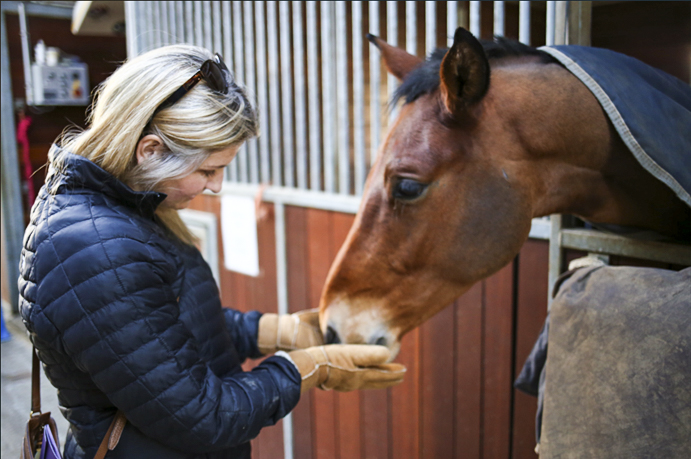
Outside of work, Catherine is a proud parent of two young boys. “Most of my free time involves a bit of bribery to keep things running smoothly!” she laughs. “We love spending time outdoors—whether it’s playgrounds, visits to pet farms, or just exploring nature. Basically, anything that gets us outside and moving!”
An unfinished journey in digital pathology
Looking ahead, Catherine sees herself continuing at Leica Biosystems, contributing to the business and helping drive digital pathology adoption. “On a personal note, I feel my journey in this field isn’t complete until digital pathology is routinely used in my home country of Ireland,” she shares.
For potential candidates considering Danaher, her message is clear: “Be self-aware—know your strengths and be honest about your weaknesses. At Danaher, the opportunities are endless, but it’s a fast-paced environment where the work truly matters. If you’re fortunate to secure a role here, make every second count. Bring your best, stay curious and be ready to grow.”
Explore careers in AI, diagnostics and life sciences at Danaher.
From AI engineers and software developers to clinical researchers and early‑career talent, discover opportunities to make an impact.
Read more stories of Danaher’s women in STEM:
From scientist to leader: how Danaher’s Sarah Kehoe, PhD, gained confidence in her career
Career advancement on her own terms: Meet Dr. Helen Harrington
From intern to impact: an electrical engineer’s journey at Radiometer
Frequently asked questions: AI & diagnostics careers
AI careers in diagnostics and life sciences include roles such as AI/ML engineer, software engineer, data scientist, clinical researcher, and diagnostics product developer. These roles focus on applying AI and software to improve diagnostic accuracy, workflow efficiency, and patient outcomes across healthcare and life‑science environments.
In cancer diagnostics and digital pathology, AI is used to analyze medical images, flag quality issues, and support more efficient diagnostic workflows. By automating time‑intensive steps, AI can help pathologists and researchers focus on higher‑value decision‑making while improving consistency and efficiency in diagnostic processes.
No—many healthcare AI roles are filled by people with software, data science, engineering, or life‑science backgrounds who partner with clinical experts. Cross‑functional collaboration between technical and clinical experts is essential. Many roles focus on applying technical skills within a healthcare or diagnostics context.
Yes—early‑career and internship opportunities in AI and diagnostics are a common entry point across engineering and research teams. These opportunities often provide exposure to real‑world healthcare challenges while building technical and professional experience.
AI‑driven diagnostics careers typically require strong problem‑solving, software or data skills, and the ability to collaborate across technical and clinical teams. Equally important are communication skills and the ability to work across disciplines. Professionals must be able to combine technical expertise with an understanding of clinical or scientific needs.
At Danaher, diagnostics roles are purpose‑driven and cross‑disciplinary, combining science and technology to help improve patient outcomes. Teams work across disciplines to solve complex healthcare challenges, supported by a culture that values innovation, accountability, and professional growth. The work is fast‑paced, purpose‑driven, and focused on improving lives through science and technology.